Dar-e-Nijaat Is Proving That Good Drama Is in the Details


Some dramas make you watch the story. Others make you notice the world around it. Dar-e-Nijaat is doing a bit of both.
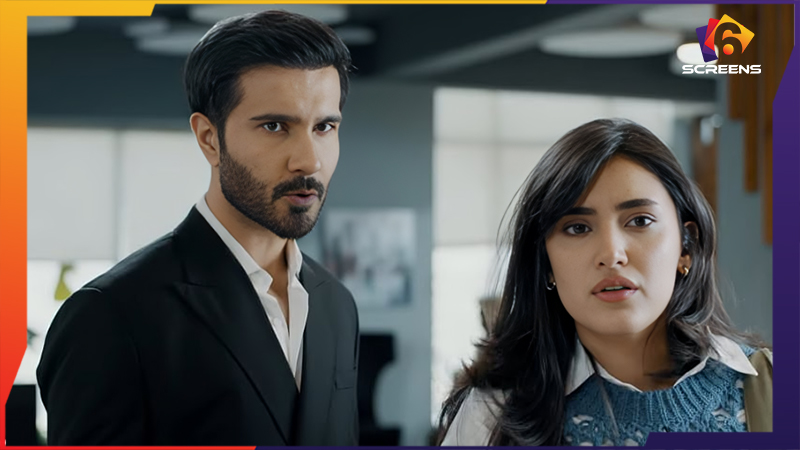
The drama has been getting attention for its layered characters and serious storyline, but there is another reason some viewers are appreciating it: the production by Salman Iqbal and Sonya Khan, under the direction of Shehryar Munawar, pays attention to small things that make the scenes feel believable.
From the time shown on a phone screen to the language characters speak, and the places they live in, the drama seems to understand that realism is often built through details viewers may not consciously notice.
Even Small Things Have a Purpose
One interesting example is a late-night WhatsApp conversation between Zaryab and Abu Bakar, where the time appears as 12:08 AM, as the scene demands a midnight conversation.
It may seem insignificant. Details like this help a scene feel connected to real life. People actually check their phones at odd hours, send messages after midnight, and continue conversations at inconvenient times. When a drama gets these little things right, the scene feels less staged.
The same approach can be seen in the characters' surroundings.
Bedrooms, furniture, and even how a bed looks can quietly tell us something about the person living there. Abu Bakar's perfectly arranged room can suggest a completely different personality from one that looks lived-in and slightly messy, just like Zaryab and Zamil's.
Instead of explaining every character trait through dialogue, the production sometimes lets the environment do the talking.

Language Makes the Characters More Convincing
Another noticeable element is the drama's use of Sindhi.
Sheheryar Munawar is from Hyderabad and speaks Sindhi naturally. So it doesn't feel forced to enhance the scene; it feels real.
That kind of consistency matters because language is part of a character's identity and surroundings. When everyone in a particular environment behaves and speaks naturally, the setting becomes much easier to believe.
Baku Was More Than Just a Pretty Background
The international scenes are another major production choice.
Parts of the drama were filmed in Baku, Azerbaijan, allowing the characters to actually interact with the city's architecture, streets, and surroundings. Plus, the distance shown between Suffolk University and Harvard University is the same as shown in the drama: 10 to 16 minutes by taxi and 20 to 25 minutes by subway.
That makes a difference on screen. Real locations and detailed research on the story give actors something genuine to respond to, while the camera can capture natural lighting, movement, and the atmosphere of the place.
More importantly, the location doesn't feel completely disconnected from the story. It becomes part of the visual identity of those scenes.
The Setting Helps Tell the Story
This is probably what makes the production stand out more than any individual detail.
The locations, costumes, language, and interiors work together instead of feeling like separate choices. The result is a drama series where the world feels lived in.
When Zamil went to offer namaz, his friend, who accompanied him to the mosque, had a prayer callus on his forehead. A prayer callus is a mark on a person's forehead or feet that appears when the person offers namaz daily.
These choices don't necessarily demand attention. In fact, the best ones are often the details viewers don't stop to think about.

Good Production Isn't Always About Looking Expensive
A drama can have beautiful sets and expensive locations and still feel artificial.
What makes a production convincing is consistency.
If the time, location, language, costumes, and characters all make sense together, viewers are less likely to question what they are seeing. They simply accept the world of the story.
That is where Dar-e-Nijaat seems to be putting effort. It isn't relying only on big locations or dramatic scenes. It is also building credibility through the smaller visual and cultural choices.
And audiences notice these things more than they used to.
Viewers now regularly discuss continuity, locations, costumes, and even background details on social media. A scene that might once have passed unnoticed can easily become a talking point when people spot something particularly authentic—or something that doesn't make sense.
The Details Should Serve the Story
The real value of these choices is not that they make Dar-e-Nijaat look polished. It is that they help the story feel more grounded.
A timestamp establishes when a conversation is happening. A language choice tells us something about a character. A bedroom gives clues about personality. A real location creates atmosphere.
None of these things needs a long explanation.
When all of them work together, the audience can understand the world without being told what to think about it.
That is perhaps the biggest strength of good production design: it supports the story quietly.
Big production choices may catch the eye, but it is often the smaller ones that make a fictional world believable.