2016 vs 2026: How Pakistani Dramas Have Changed
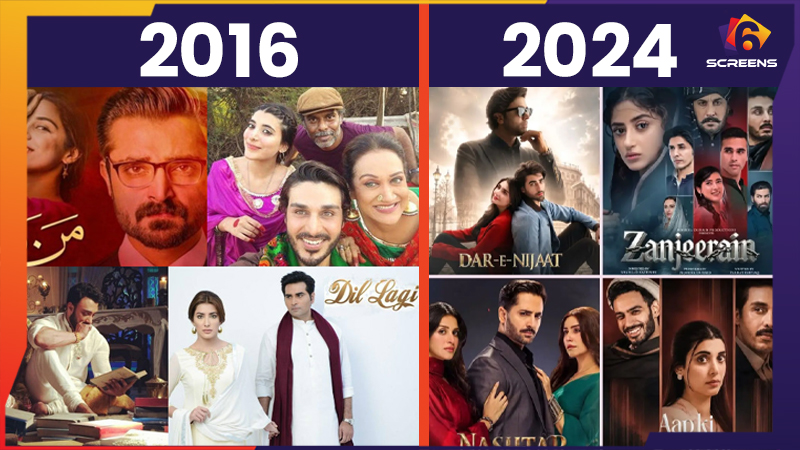
If you watched Pakistani dramas back in 2016, you probably remember a different television era.
This was the time of Mann Mayal, Dil Lagi, Udaari, Besharam, and several other dramas that became talking points in households. Television was still the place where audiences followed their stories instead of watching them on their phones.
Fast-forward to 2026, and the Pakistani dramas industry looks noticeably different.
The stars are bigger, audiences are more vocal, production has become more ambitious, and viewers are no longer watching only what happens on television. They are discussing scenes on Instagram, making edits for TikTok, sharing screenshots, and following dramas almost episode by episode online.
But the biggest change may be in the stories themselves.
So, what really separates Pakistani dramas of 2016 from Pakistani dramas of 2026?
2016 Was the Era of Big Emotional Stories
2016 gave viewers dramas that knew how to build emotional attachment.
Mann Mayal became one of the year's major television conversations, while Dil Lagi brought Humayun Saeed and Mehwish Hayat together in a romance built around two strong personalities. Udaari, meanwhile, took a much more serious route, dealing with issues including child sexual abuse, gender discrimination,n and violence against women.
There was plenty of romance and family drama, but there was also room for stories that tried to discuss uncomfortable social issues.
The interesting thing about 2016 dramas is that they often gave characters time to develop.
You could spend weeks watching a character make bad decisions, fall in love, fight with their family, and slowly change.
And yes, sometimes the misunderstandings lasted way too long.
But viewers were invested.

2026 Is More Comfortable With Complicated Characters
Acting styles have evolved well. Then performances leaned toward melodrama. Emotions were loud and exaggerated. Today actors aim for subtlety. Their expressions carry weight without needing words. This change makes the stories feel more real.
A character can be someone you feel sorry for in one episode. Someone you find hard to deal with in the next. Some stories are also ready to look at relationships that're not easy to define as good or bad instead of showing simple and unrealistic love stories.
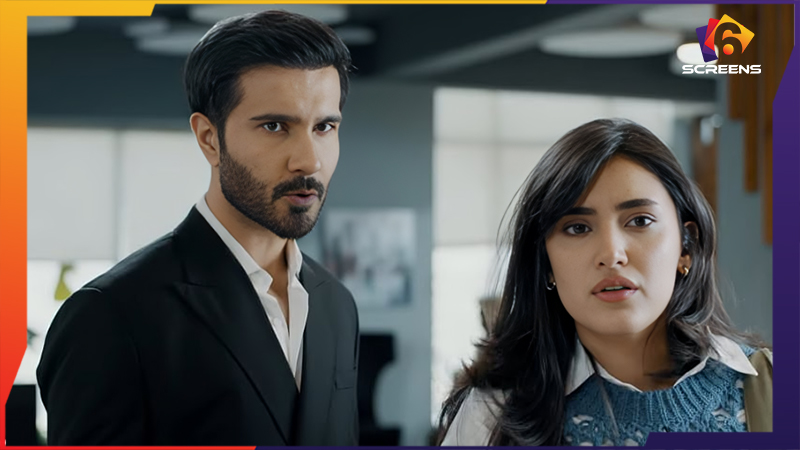
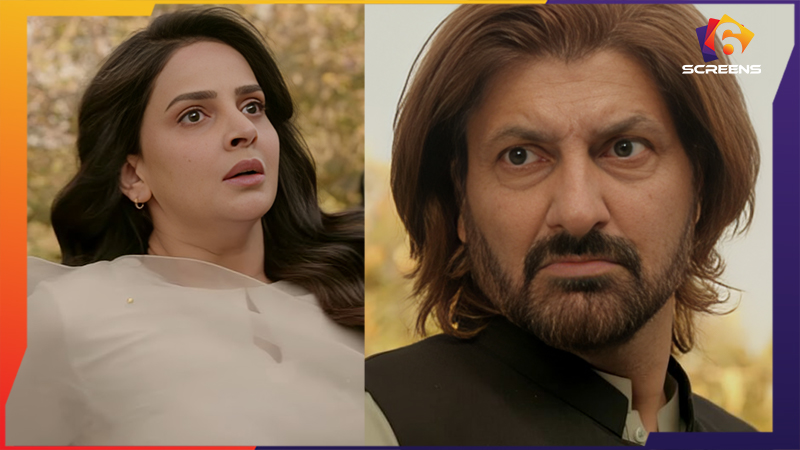
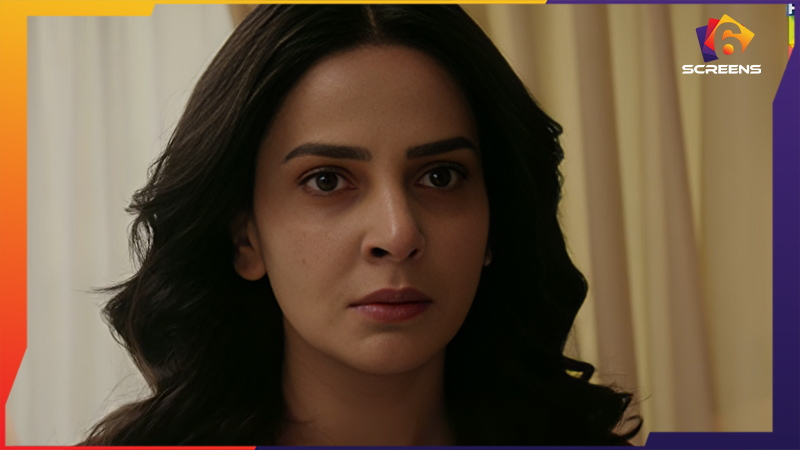
The talk about dramas from 2026 implements this change. Shows like Muamma, Kafeel, Case No. 9, and Aik Aur Pakeezah have been talked about for bringing stories that are important for society and actually happening these days. These kinds of scripts have been at the top of the charts.
There are still plenty of familiar family conflicts, romances, and emotional storylines.
The difference is that audiences now have more variety to choose from.
The Female Characters Have Also Changed
Back in 2016, Pakistani television had plenty of strong female characters, but many stories still placed women inside familiar family and romantic conflicts.
Dil Lagi, for example, was noted for its strong female protagonist and its depiction of family bonds and women supporting one another.
In 2026, female characters are appearing in an even wider range of situations.
They can be ambitious, flawed, career-focused, rebellious, emotionally complicated,d or simply unwilling to accept the life chosen for them, like Zeba in Kafeel, Sehar from Case No. 9, and more.
There is still a lot of room for improvement, but the range of female characters has certainly expanded.
And viewers are quicker to question the way these characters are written.
Romance Looks Different Too
Pakistani dramas have always loved romance. That part has not changed.
What has changed is the way audiences respond to romantic relationships.
In 2016, viewers could become completely invested in a couple simply because of chemistry and emotional tension.
In 2026, viewers are also asking questions about the relationship itself.
Is the behaviour actually romantic? Is the relationship healthy? Is the male lead a green flag or a red flag? Why is this character behaving this way?
In 2016, most dramas focused on romance, family conflicts, and traditional values. There were heartbreaks, misunderstandings, and happy endings that felt familiar. By 2026, many dramas like Case No. 9 and Kafeel tackle deeper issues like mental health, gender inequality, and class differences, pushing boundaries and offering narratives that made people think more.
2016 Had Television Stars—2026 Has Digital Stars Too.
This is probably one of the biggest differences.
In 2016, an actor's television presence was a major part of how audiences knew them. The number of social media followers didnot decide the popularity of an actor back then.
Today, an actor can already have millions of followers before appearing in a major drama. Social media has changed the relationship between celebrities and viewers. An actor's Instagram presence, interviews, viral clips, and behind-the-scenes content can become almost as important as their television work.
This has also opened the door for digital creators to move into mainstream dramas.
The line between television celebrity and internet celebrity is no longer as clear as it once was.
Production Has Become More Ambitious
This is another area where the difference is easy to notice.
Many 2016 dramas were largely built around familiar Pakistani locations, homes, and television sets. The visual quality was also not as good as it is in 2026.
Today's productions are increasingly willing to travel and experiment visually. In 2016, filming techniques were simpler. Today, high-definition cameras, lighting, and professional sound design make every scene look polished. Music and editing play a role too. A placed song or a dramatic pause can change the mood of a whole episode.
International locations, more cinematic camera work, elaborate costumes, and carefully designed sets are becoming part of the television experience.
Current 2026 programming includes large productions across HUM TV, ARY Digital, Geo, and Green Entertainment, while new releases such as Mitti De Baway are bringing major stars and ambitious projects to the screen.
The visual expectations of viewers have simply changed.
People are used to Netflix, YouTube, international films, and high-production digital content.

But 2026 Has Also Become Faster
There is one major downside to today's television culture.
Everything moves quickly.
In 2016, viewers might wait an entire week to discuss an episode.
In 2026, one scene can become a viral clip within minutes.
A character's dialogue can turn into a meme before the episode has even finished airing.
The audience reaction is almost immediate.
Current drama platforms and social media discussions show just how easily individual episodes and scenes can become measurable online moments.
That creates pressure on writers and producers.
A slow episode can be criticised instantly.
A controversial scene can dominate the internet.
And sometimes a drama becomes famous for one viral moment rather than its entire story.
The Way We Watch Has Completely Changed
This may be the biggest difference between 2016 and 2026.
Ten years ago, you mainly watched a drama when it aired on television.
Today, viewers have much more control.
They can watch episodes online, follow clips on social media, read reviews, watch reaction videos, and discuss theories with people they have never met.
So what’s next? The future of dramas seems exciting. With freedom, better technology, and changing viewer expectations, the industry keeps growing. It’s not about entertainment anymore. It’s about reflection, connection and change.